Rotary Vibrating Sieve Introduction
Wide range of rotary vibrating sieves
Any particle, powder, or slurry can be screened. Sieving small to 500 mesh(28 microns), and filtering small to 5 microns can achieve efficient screening and filtering.
Mesh anti-clogging powder rotary vibrating sieve
The rotary vibrating sieve is designed with automatic cleaning and anti-clogging settings to minimize the chances of blocking the screen.
Rotary vibrating sieves have a single-layer or multilayer sorting
It can select one to five screens, simultaneously sorting or filtering two to six grades.
High-efficiency accurate screening of the rotary vibrating sieve
The materials are discharged automatically from the rotary vibrating sieve, ensuring no material remains inside the machine and preventing buildup or cross-contamination. The optimized design of the round vibrating sieve allows smooth material flow and continuous operation.
Compared with other types of screening equipment of the same size, the round vibrating screen offers higher screening capacity and greater processing efficiency, making it ideal for powder and granular material classification in food, pharmaceutical, and chemical industries.
Screen convenient replacement of the rotary vibrating sieve
According to the different needs of a variety of screen grid structures. One of the replacement screen times is down to 3-5 minutes. Screen longer life and higher efficiency.
No mechanical vibration conduction of the rotary vibrating sieve
The three-dimensional vibration generated by the new vibration source is strong and steady. Equipment can be installed in any desired location with ease of movement.
Economic and environmental of the rotary vibrating screen
The machine and screen have a long life, low energy consumption, low maintenance costs, and high efficiency, easy to replace, and other features make the device affordable.
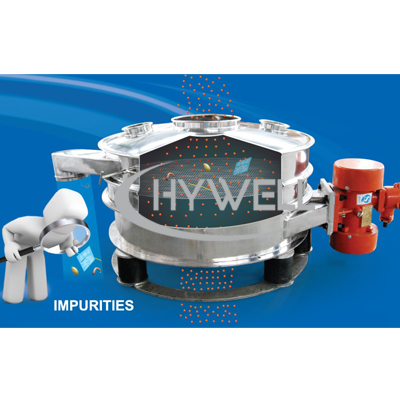
Rotary Vibrating Sieve
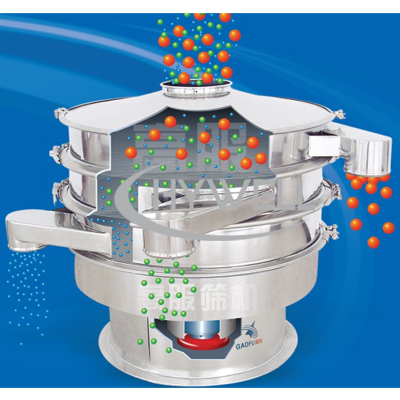
Rotary Vibrating Sieve
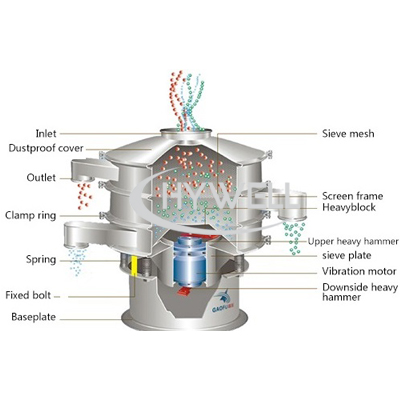
Rotary Vibrating Sieve
Rotary Vibrating Sieve Specifications
Model | capacity(kg/h) | Sieve hole (mesh) | Motor power(KW) | weight(Kg) |
ZS-400 | 50-300 | 3-200 | 0.55 | 150 |
ZS-600 | 100-450 | 3-200 | 0.75 | 250 |
ZS-800 | 300-750 | 3-200 | 1.1 | 320 |
ZS-1000 | 400-1100 | 3-200 | 1.5 | 400 |
ZS-1200 | 600-1600 | 3-200 | 1.5 | 500 |
ZS-1500 | 800-1800 | 3-200 | 2.2 | 600 |
ZS-1800 | 1000-2000 | 3-200 | 3.0 | 800 |
ZS-2000 | 1300-2500 | 3-200 | 3.0 | 1000 |
1. Hywell machinery reserves the right to the design without notice 2. All specifications are as accurate as is reasonably possible, but they are not binding. |
How to Select the Right Model of Circular Screening Machine?
When selecting a circular screening machine (round vibrating sieve / circular vibrating screen), the following key parameters must be carefully considered to ensure proper performance and long service life:
1. Material Characteristics (Most Important)
You must clearly understand the properties of the material:
• Material name
• Particle size distribution
• Moisture content
• Bulk density
• Flowability
• Viscosity (if applicable)
Material properties directly affect screening efficiency and whether the mesh will clog.
2. Processing Capacity (Throughput)
• Required output (kg/h)
• Batch or continuous operation
Capacity determines the diameter and deck size of the round vibrating screen. Choosing the wrong size may lead to overflow or wasted investment.
3. Required Separation Accuracy
Target mesh size (mesh number or micron)
Number of size fractions to be separated
If multiple particle sizes need separation, a multi-deck circular vibrating sieve is required.
4. Number of Decks (Layers)
1). 1 layer → impurity removal
2). 2–3 layers → grading/classification
Up to 5 layers available (3 layers recommended for stability)
More layers increase complexity but allow multi-stage separation.
5. Screen Cleaning System
To prevent mesh blockage:
1). Bouncing ball system
2). Ultrasonic system (for fine powder below 200 mesh)
Rotary Vibrating Sieve Principles
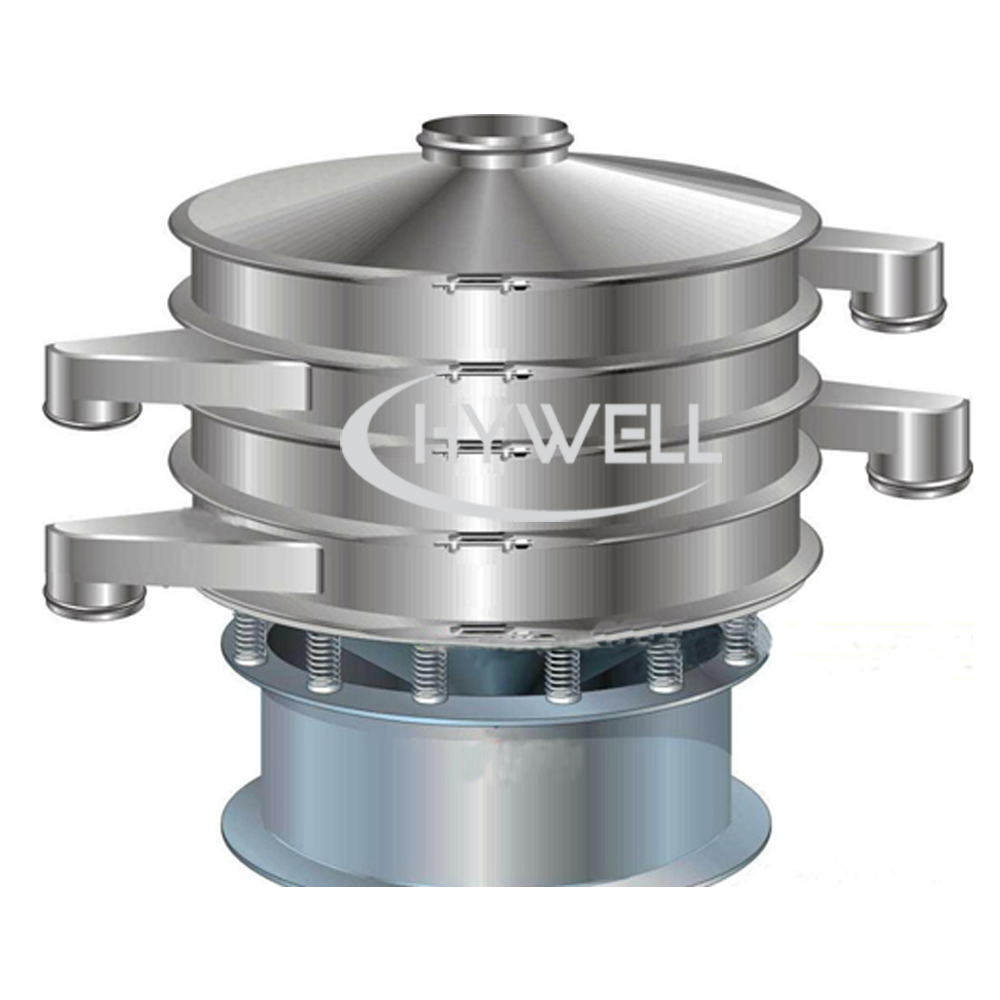
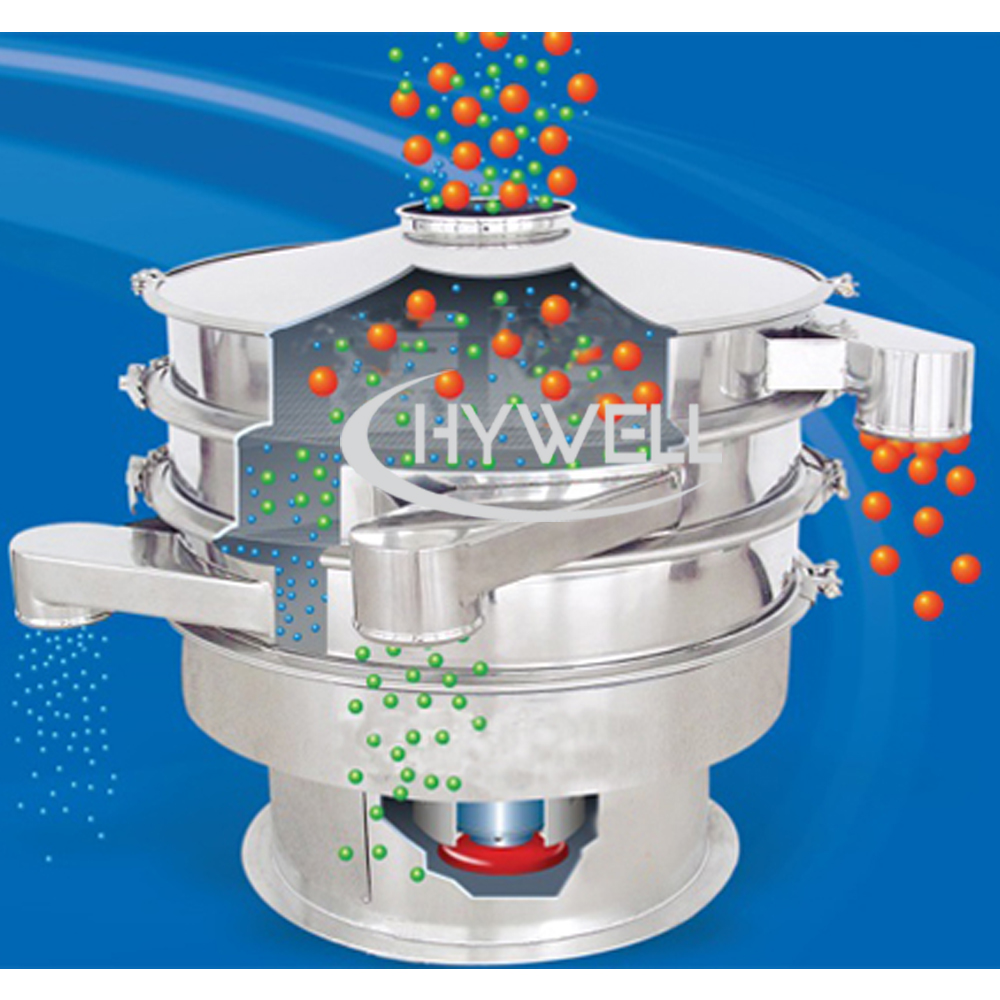
The round vibrating sieve, also known as a circular vibratory sieve or rotary vibrating sieve, uses a vertical motor as the vibration source. An eccentric weight (hammer) is installed on both the upper and lower ends of the motor shaft. By adjusting the phase angle of the upper and lower eccentric weights, the movement trajectory of the screen surface can be precisely controlled. This allows the round vibrating screen to generate three-dimensional motion, ensuring efficient screening performance.
To prevent mesh blockage, the round vibratory sieve can be equipped with an effective screen cleaning system, such as bouncing balls or ultrasonic devices. The vertical and horizontal motion of the machine, as well as the material flow path across the screen deck, can be accurately adjusted by changing the angle of the two eccentric weights.
Our round vibrating sieve machine is designed to sift, de-dust, and classify a wide range of powders and granules. It efficiently removes oversized particles and impurities, ensuring stable and reliable processing. We supply round vibrating screeners in single-deck or multi-deck configurations, suitable for both batch and continuous production lines in food, pharmaceutical, and chemical industries.
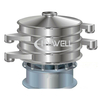
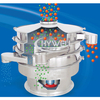
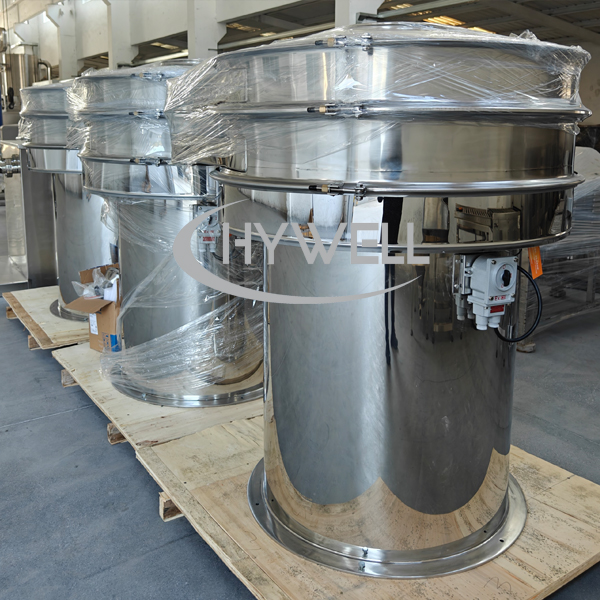 Round vibrating sieve
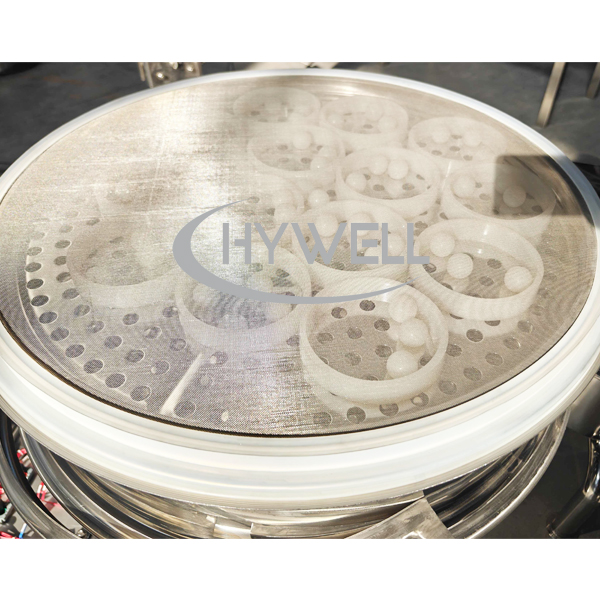
Sieve with frame
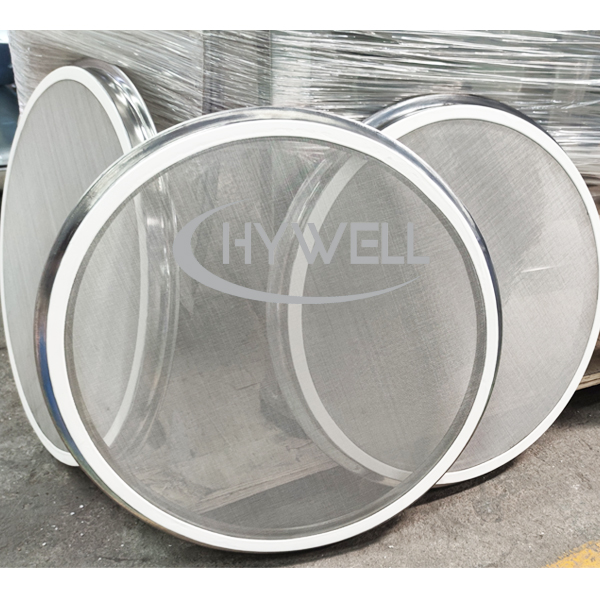
Sieve with frame
How Does a Rotary Vibrating Sieve Work?
The working principle of a rotary vibrating sieve involves the following steps:
Step 1: Material Feeding
The material to be screened is fed into the center of the sieve through an inlet.
Step 2: Gyratory Motion
The motor generates vibrations, which cause the sieve to vibrate in a gyratory motion. This motion spreads the material evenly across the screen surface.
Step 3: Particle Separation
As the material moves across the screen, particles smaller than the sieve openings pass through, while larger particles are retained on the screen surface.
Step 4: Discharge
The separated particles are discharged through designated outlets, while the oversized particles continue to travel towards the outlet end of the sieve.
Applications of Rotary Vibrating Sieves
Rotary vibrating sieves find applications in a wide range of industries, including:
a) Food and Beverage Industry
Rotary sieves are commonly used for sifting and classifying various food products, such as flour, sugar, spices, and powdered ingredients. They ensure product quality by removing impurities and oversized particles.
b) Pharmaceutical Industry
These round vibration sieves play a crucial role in pharmaceutical manufacturing processes, where the accurate separation of powders and granules is essential. They are commonly used in tablet production, powder coating, and active pharmaceutical ingredient (API) processing.
c) Chemical Industry
Rotary vibrating sieves are widely used in the chemical industry for screening and separating different types of chemicals, pigments, dyes, and fertilizers.
Rotary Vibrating Sieve Feature
Hywell Machinery ZS Series Round Vibrating Sieve (also known as a rotary vibrating sieve or circular vibratory sieve) offers the following advantages over conventional screening solutions:
Higher Accuracy – Full material flow across the entire mesh surface ensures precise grading and efficient separation with the round vibrating screen.
Lower Noise – High-quality springs installed between the machine base and the vibrating body reduce operating noise to below 60 dB, ensuring smooth and quiet performance.
Easy Operation & Low Maintenance – The specially designed vibrator housing allows the use of standard vertical motors instead of specialized vibratory motors, reducing maintenance costs for the round vibratory sieve machine.
Reduced Cleaning Downtime – The unit can be quickly disassembled without tools. All contact parts of the circular vibrating sieve are fully washable for fast cleaning.
GMP-Compliant Design – The barrel features highly polished inner and outer surfaces with no dead corners, allowing easy discharge, easy cleaning, and no cross-contamination, fully meeting GMP requirements.
Production Line Integration – The round vibrating sieve can be connected with drying equipment such as a vibration fluid bed dryer or fluid bed dryer for continuous processing lines.
Grinding Line Compatibility – The circular vibratory sieve can also work with powder grinding machines, such as a 30B pin mill, to screen oversized particles after milling.
High Efficiency & Durable Design – Refined structure, stable operation, and suitability for various powders and viscous materials make this round vibrating screen machine highly versatile.
Easy Screen Replacement – Quick mesh change, simple operation, and convenient washing improve production efficiency.
No Mesh Blocking – The rotary vibrating sieve machine prevents mesh clogging, eliminates powder leakage, and supports fine screening sizes from 500 mesh down to 0.028 mm.
Multiple Deck Options – The round vibrating sieve can be configured with up to five layers, though three layers are recommended for optimal screening performance.
Advantages of Using Rotary Vibrating Sieves
Using a rotary vibrating sifter machine offers several advantages over traditional screening methods. Here are some key benefits:
a) High Screening Efficiency
Rotary vibration sieves are designed to maximize screening efficiency. The gyratory motion and unique screen design ensure that every particle comes into contact with the screen surface, resulting in efficient and accurate separation.
b) Precise Particle Separation
With adjustable screen openings and customizable sieve sizes, rotary vibrating sieves provide precise particle separation according to specific requirements. This level of precision is particularly important in industries where product quality and consistency are paramount.
c) Versatility and Adaptability
Rotary vibrating sieves are versatile machines that can handle a wide range of materials, including powders, granules, and liquids. They can be easily customized with different screen types and mesh sizes to accommodate various applications.
d) Compact Design and Space-saving
Rotary vibrating sieves are known for their compact design, making them ideal for installations where space is limited. They can be easily integrated into existing production lines without significant modifications.
e) Low Noise and Minimal Vibration
Compared to other screening equipment, rotary vibrating sieves generate minimal noise and vibration during operation. This makes them suitable for use in noise-sensitive environments and ensures a comfortable working environment for operators.
f) Easy Maintenance and Cleaning
Round vibrating sieves are designed for easy maintenance and cleaning. The removable screens and access panels allow for quick inspection, replacement, and cleaning of components, minimizing downtime and ensuring optimal performance.
g) Cost-effective Solution
The efficiency, durability, and versatility of rotary vibrating screen make them a cost-effective screening solution in the long run. They help improve productivity, reduce manual labor, and enhance product quality, resulting in a favorable return on investment (ROI).
Rotary Vibrating Sieve Construction Material
Hywell Machinery is able to offer our ZS Series rotary vibrating sieve with contact parts to be built in SS304, SS316L, Titanium, Duplex stainless steel, etc. Electrical parts of the control system of the Powder screen machine can be adapted to the customer’s needs.
Common Troubleshooting and Problem-Solving for Rotary Vibrating Sieves
Despite their reliability, rotary vibrating sieves may encounter occasional issues that can affect their performance. Here are some common troubleshooting tips:
a) Uneven Screen Motion
If the screen motion is uneven or erratic, check for loose or worn-out drive belts, damaged motor bearings, or misaligned eccentric weights. Adjust or replace these components as necessary.
b) Screen Clogging
If the screens are frequently clogged, consider using self-cleaning screen surfaces or implementing additional screening aids such as bouncing balls or ultrasonic systems to prevent blockages.
c) Insufficient Throughput
If the throughput is lower than expected, check for worn-out or damaged screens, incorrect screen mesh size, or improper screen tension. Replace or adjust the screens accordingly.
d) Excessive Vibrations or Noise
Excessive vibrations or noise may indicate a mechanical issue, such as loose fasteners, unbalanced eccentric weights, or worn-out bearings. Inspect and repair or replace the affected components.
e) Inconsistent Particle Separation
If the particle separation is inconsistent, ensure that the material feed is evenly distributed across the screen surface. Adjust the feed rate or implement feeders to improve distribution.
Factors to Consider When Choosing a Rotary Vibrating Sieve
When selecting a rotary vibrating sieve machine for your specific application, it's important to consider the following factors:
a) Capacity and Throughput Requirements
Determine the desired processing capacity and throughput rate to ensure the selected sieve can handle the required volume of material efficiently.
b) Material Characteristics
Consider the properties of the materials to be screened, such as particle size, density, moisture content, and flowability. This information will help determine the appropriate sieve design, screen type, and mesh size.
c) Screen Design and Mesh Size
Choose a sieve with a screen design and mesh size suitable for the intended application. Different screen designs, such as perforated plates, woven wire mesh, and synthetic screens, offer varying performance characteristics.
d) Equipment Durability
Assess the durability and build quality of the rotary vibrating sieve. Look for robust construction, high-quality materials, and reliable components that can withstand the demands of your application and provide long-term durability.
e) Ease of Maintenance
Consider the ease of maintenance and accessibility of key components. Look for features such as quick-release clamps, tool-free screen changes, and easy access to inspection points, which can simplify maintenance tasks and minimize downtime.
f) Safety Features
Ensure that the rotary vibrating sieve is equipped with necessary safety features, such as protective covers, emergency stop buttons, and safety interlocks, to protect operators and comply with safety regulations.
g) Supplier Reputation and Support
Choose a reputable supplier with a track record of delivering quality equipment and providing excellent customer support. Check for warranties, spare parts availability, and technical assistance to ensure a smooth and reliable operation.
Attention to Order of the Rotary Vibrating Sieve
When inquiring about the ZS Series Round Vibrating Sieve (also known as a rotary vibrating sieve or circular vibrating screen), please provide the following information to help us recommend the most suitable model:
Material Name
Please specify the exact name of the material to be processed with the round vibratory sieve.
Material Characteristics
Provide key material properties, including bulk density, moisture content, particle size distribution, abrasiveness, viscosity, and any special characteristics (such as HP value or corrosiveness).
Number of Separation Grades
Indicate how many different particle size fractions need to be separated by the rotary vibrating screen.
Required Mesh Size for Each Grade
Please specify the target particle size or mesh size for each separated fraction to ensure accurate configuration of the circular vibratory sieve.
Material of Construction
Confirm whether the machine should be made of SS304 or SS316L stainless steel. Hywell can also recommend the appropriate stainless steel grade based on the material properties and processing requirements.
Providing these details will allow us to design the most efficient and reliable round vibrating sieve machine for your application.


 简体中文
简体中文
 简体中文
简体中文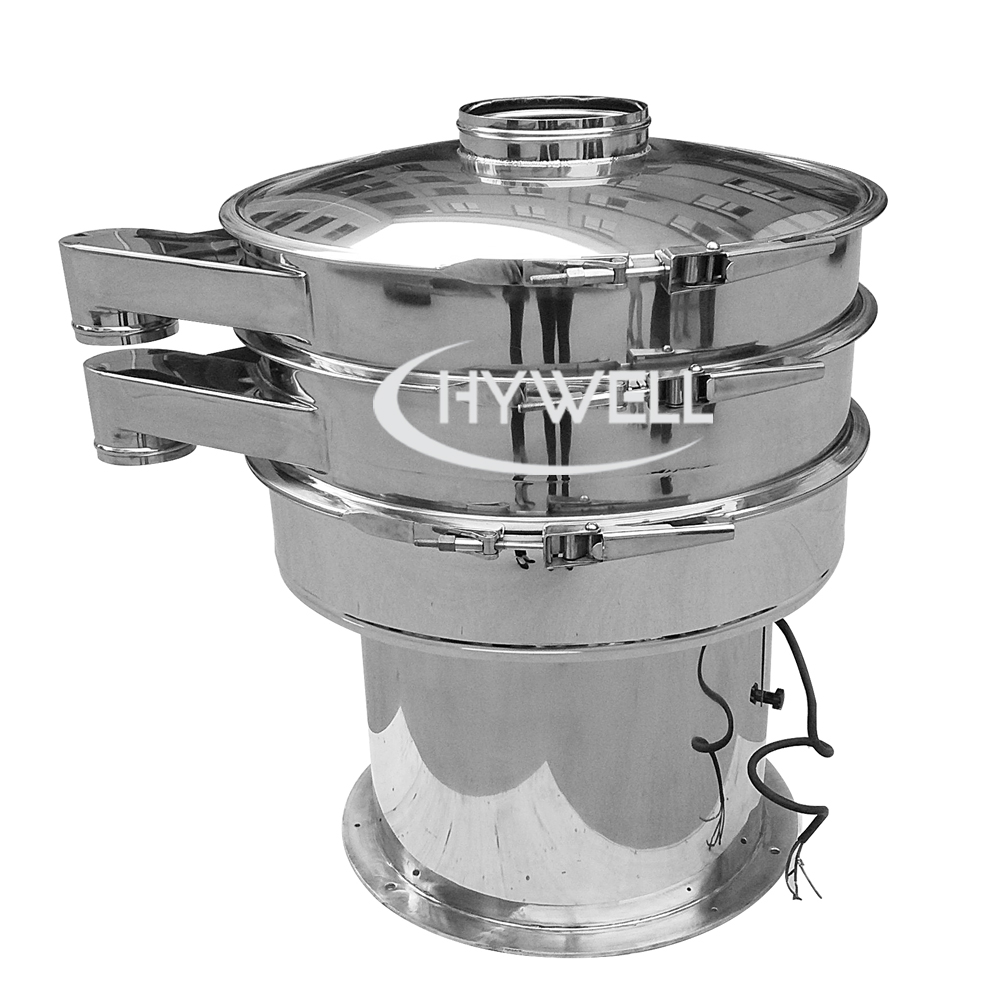
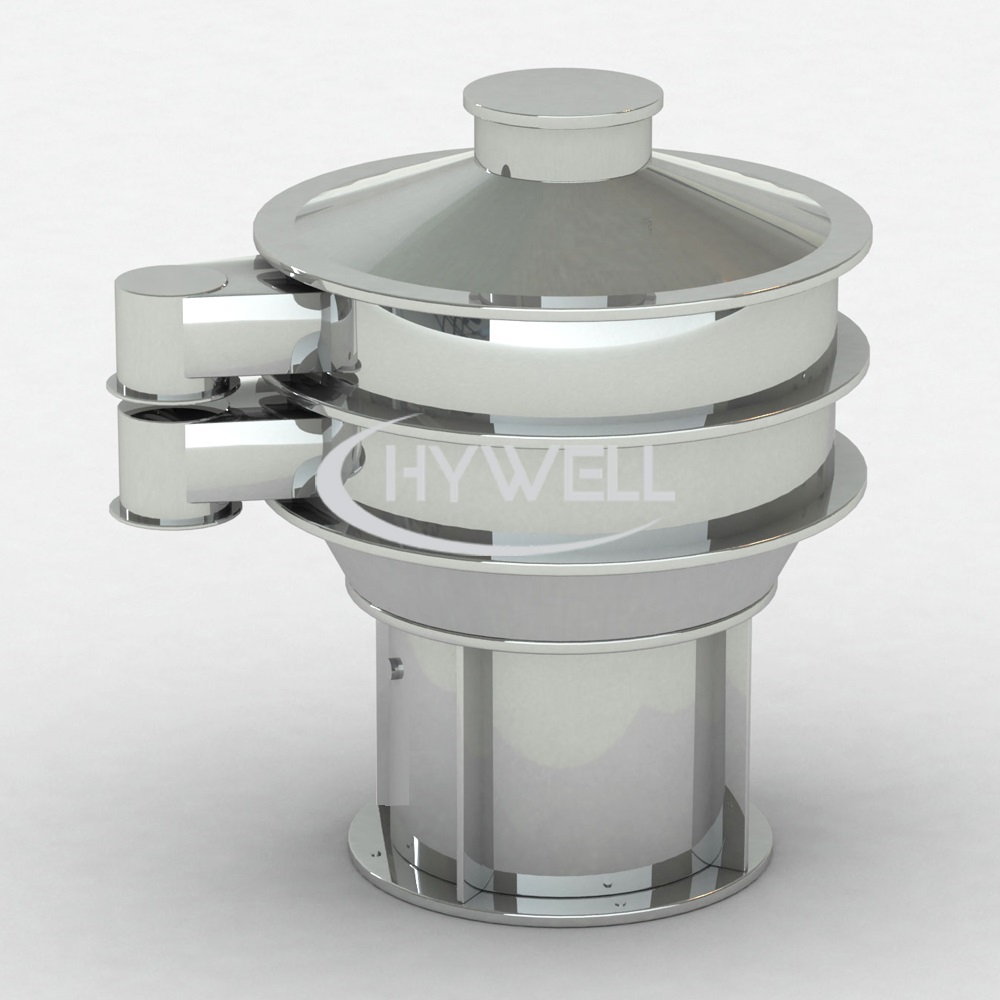


 Round vibrating sieve