Efficient Thermal Processing Solution for Lithium-Ion Battery Recycling
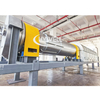
The Hywell Lithium Battery Recycling Rotary Kiln is a continuous thermal processing system specifically designed for the recycling of spent lithium-ion batteries, battery manufacturing scrap, black mass, and cathode materials. The system uses controlled heating and atmosphere management to remove organic binders, electrolytes, plastics, and residual carbon while preserving valuable metals such as lithium, nickel, cobalt, manganese, copper, and graphite.
As the global demand for lithium battery recycling continues to grow, rotary kilns have become one of the most reliable technologies for black mass pyrolysis, battery material calcination, and cathode material regeneration. Compared with batch furnaces, rotary kilns offer continuous operation, higher throughput, better heat transfer efficiency, and more consistent product quality.
Whether processing NMC, LFP, NCA, or battery production scrap, Hywell's rotary kiln provides an energy-efficient and highly automated solution for modern battery recycling plants.
How the Battery Recycling Rotary Kiln Works
1. Sealed Feeding System
Black mass, battery scrap, or cathode materials are fed into the rotary kiln through a sealed feeding system. This design minimizes dust emissions and maintains process atmosphere integrity.
2. Preheating Zone
The material enters the initial heating section, where moisture and volatile compounds begin to evaporate.
3. Pyrolysis Zone
In the pyrolysis section, organic compounds decompose under controlled temperatures. Electrolytes, binders, plastics, and organic contaminants are thermally removed.
Typical pyrolysis temperatures range from 400°C to 700°C, depending on the material and process requirements.
4. Calcination Zone
The calcination zone further processes the material at elevated temperatures to improve material purity and activate valuable metal compounds.
Typical calcination temperatures range from 600°C to 1100°C.
5. Cooling and Discharge
The treated material is cooled before discharge to ensure safe handling and downstream processing.
Working Process of Battery Recycling Rotary Kiln
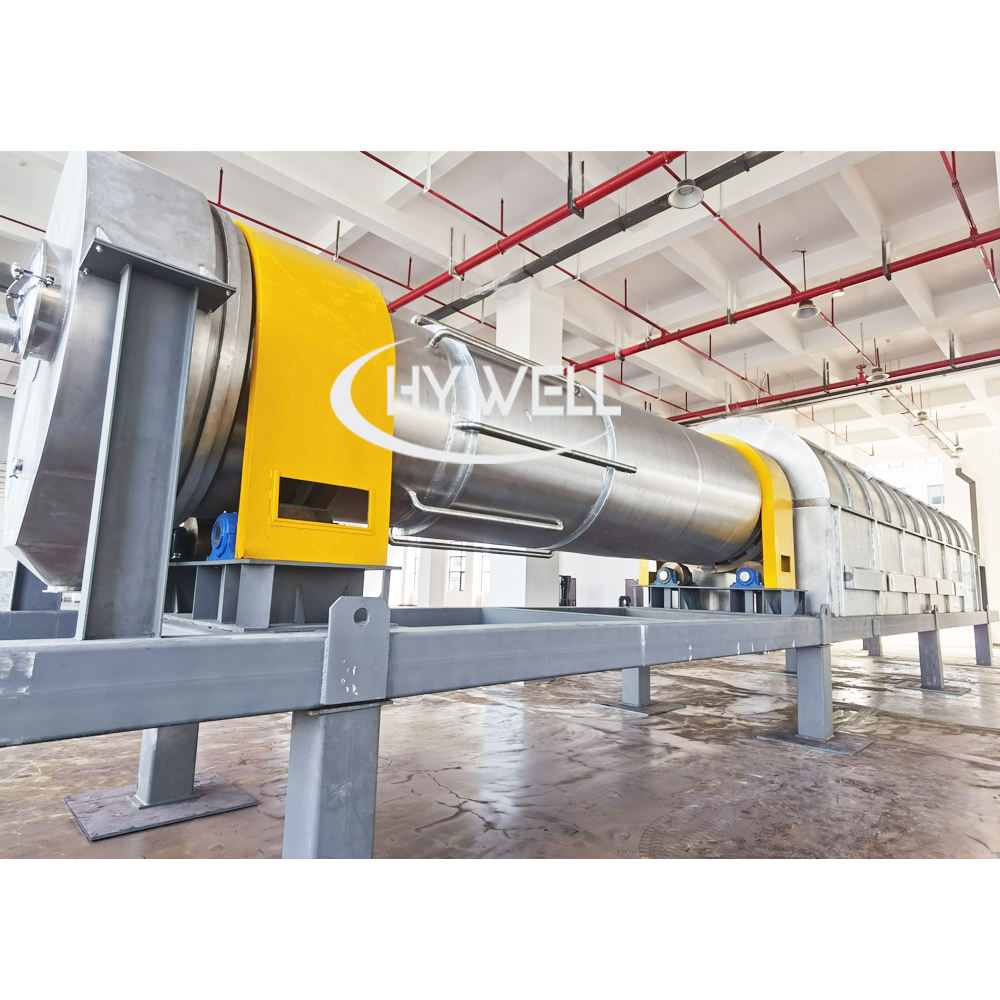
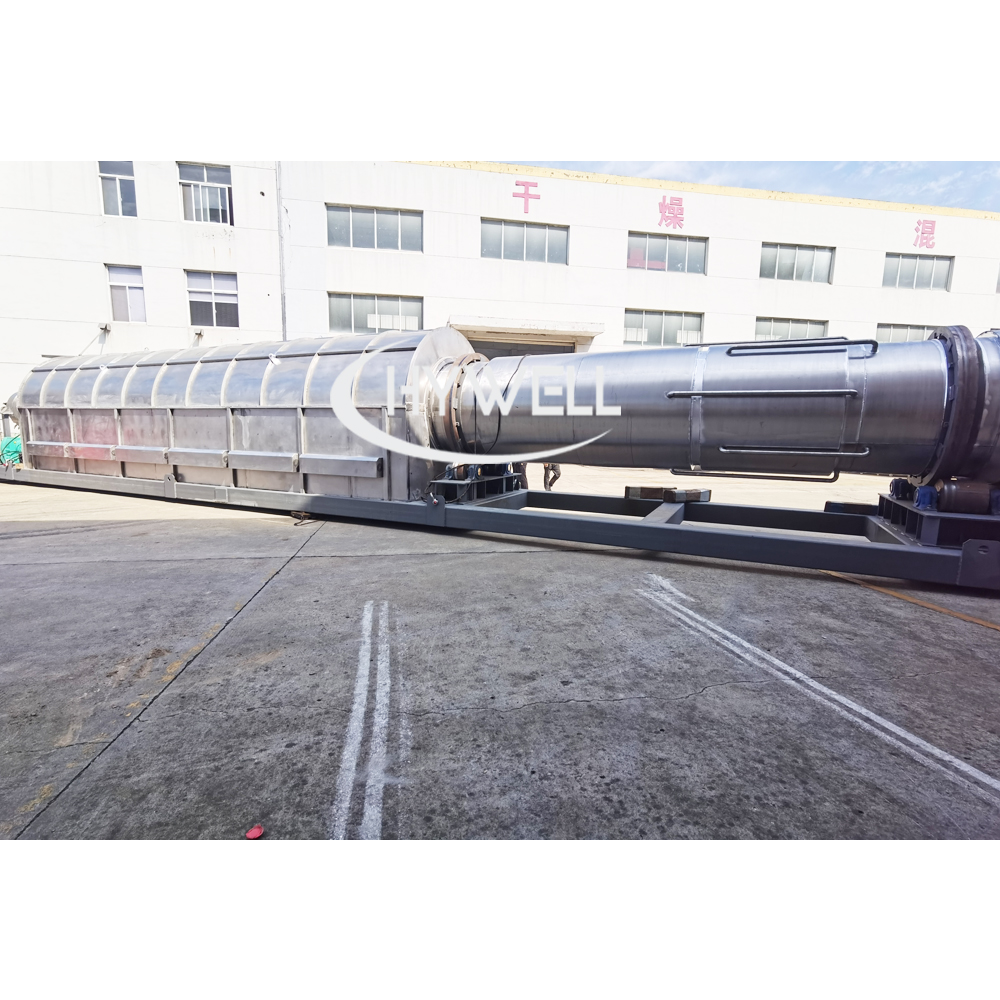
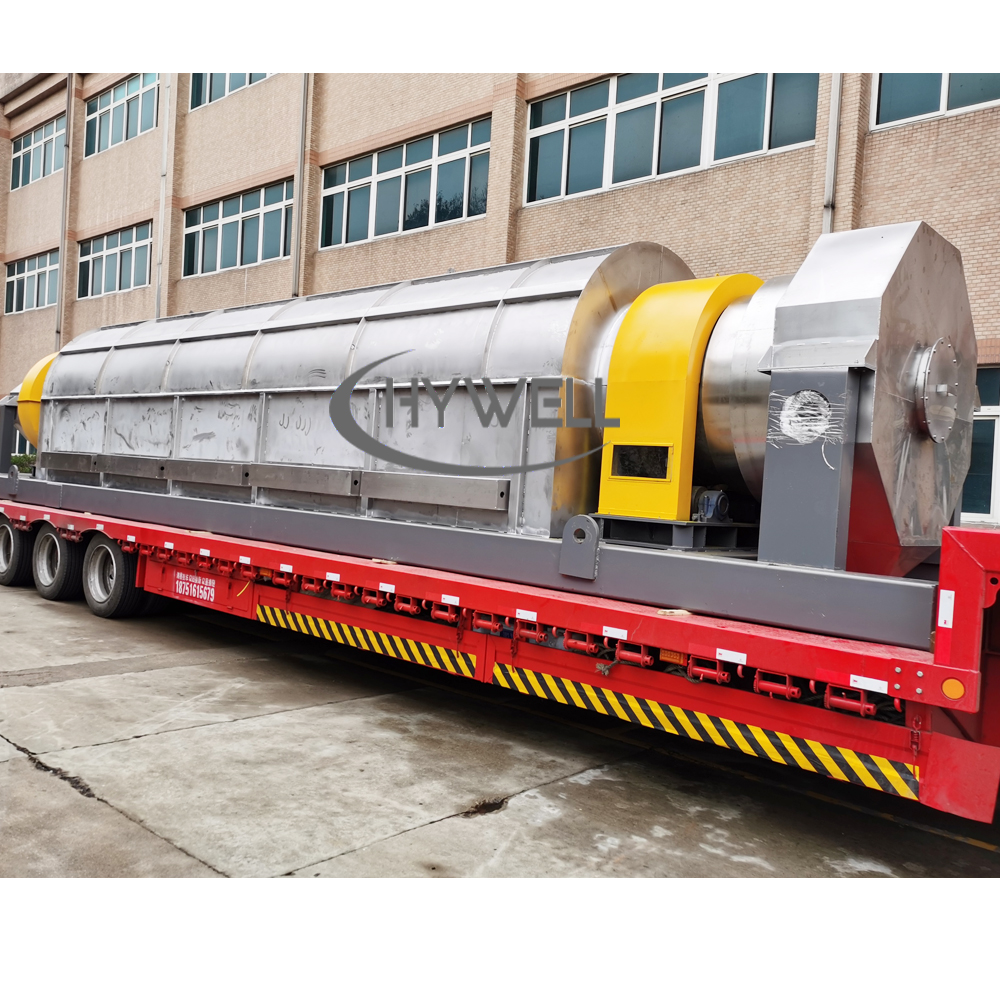
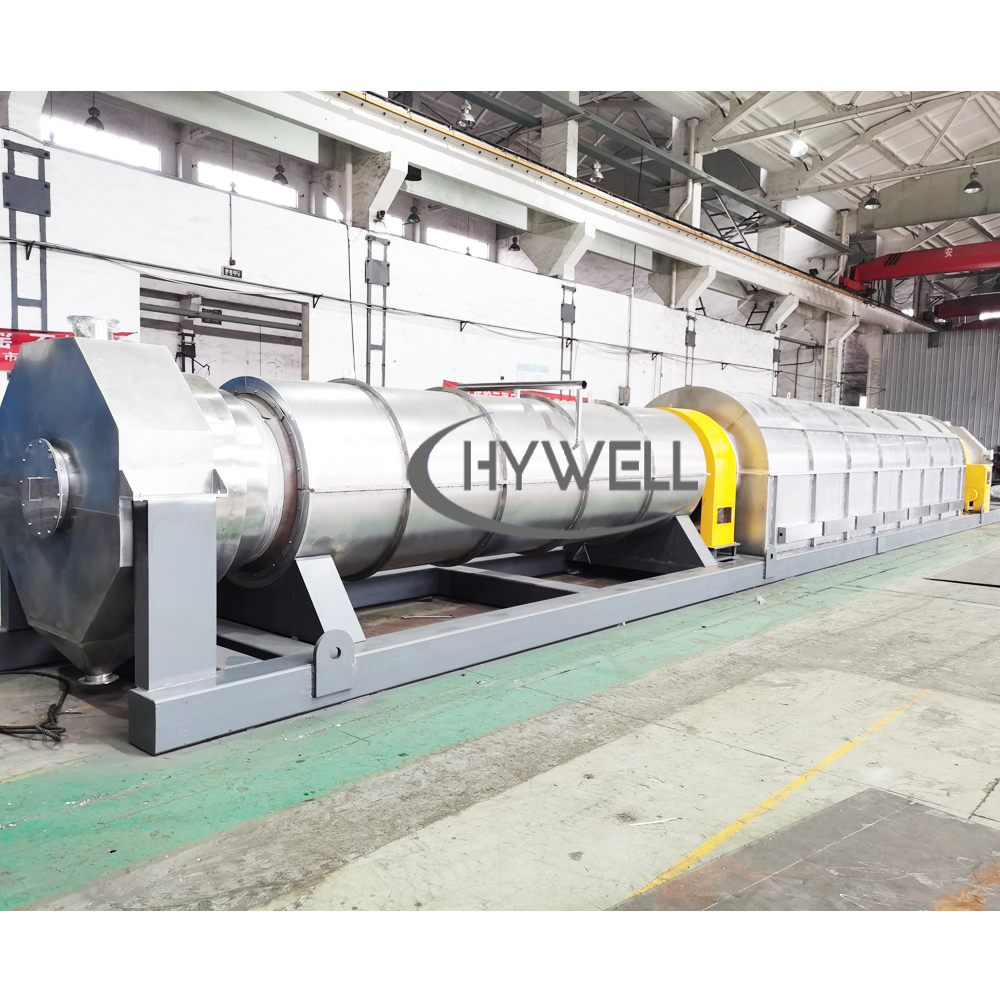
The complete system of battery recycling rotary kiln consists of a feeding device, kiln body, discharging device, heating device, control unit, etc. The heating device heats the surrounding environment of the materials in the kiln to gradually increase the temperature. When the temperature measured by the thermocouple reaches the requirement, the temperature will not continue to rise, and the material can be discharged after the reaction time reaches the specified value. The whole process is safe and efficient.
1. The feeding system is usually equipped with a screw feeder or vacuum feeder for quantitative conveying.
2. The heating kiln generally includes a pre-heating zone and a high-temperature heating zone. There are multiple temperature zones in the pre-heating zone and the high-temperature heating zone, where the temperature of each temperature zone can be set separately, and the temperature of each zone of the equipment
is required by the process.
3. According to different material characteristics, Hywell machinery's engineers will design whether the rotary kiln body needs an angle according to the material characteristics. Because our company's rotary kiln has a horizontal kiln body and an inclined kiln body.
4. The heating way of the battery materials rotary kiln has electrical heating or a gas /oil heater. If the machine heater installs an electrical heater, the resistance wire is arranged at the bottom of the kiln body to indirectly heat the material.
5. The cooler is usually a drum cooler; the material passes through the inside of the cylinder, and the outside is sprayed with water to indirectly cool the material to meet the discharge temperature requirements.
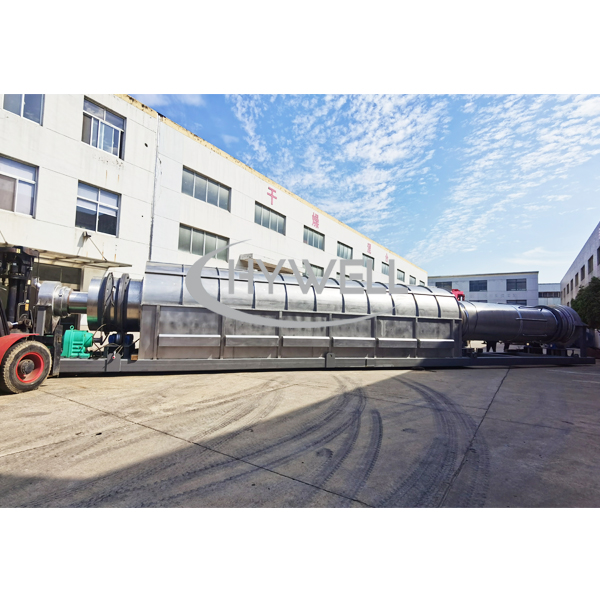
Battery Recycling Rotary Kiln
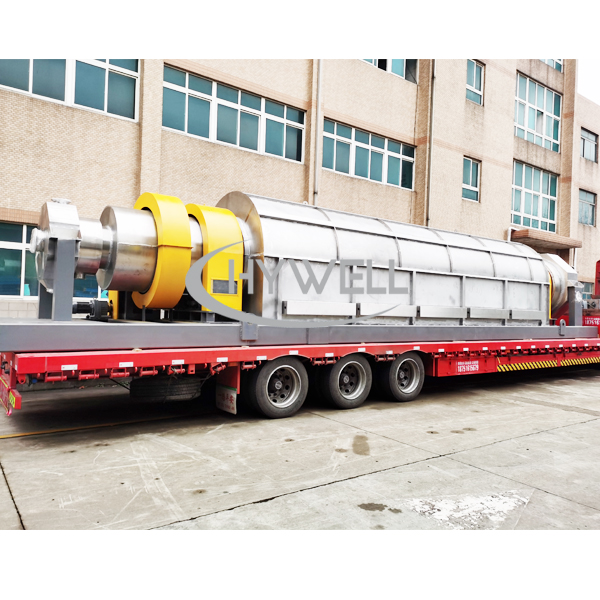
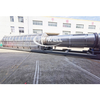
Battery Recycling Rotary Kiln
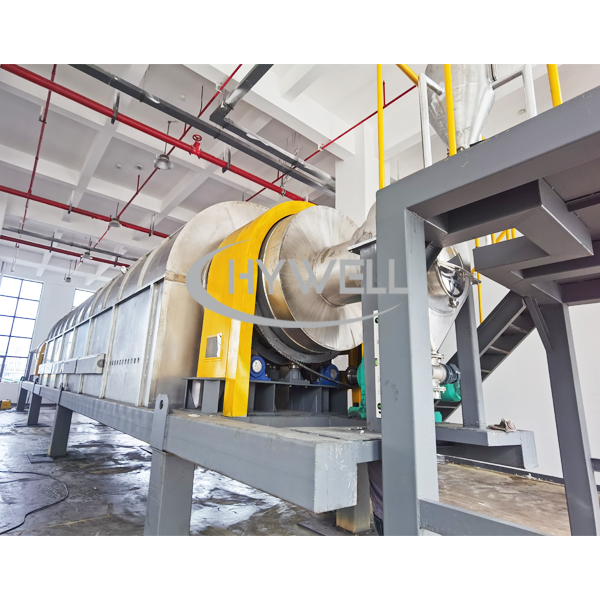
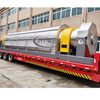
Battery Recycling Rotary Kiln
What Is a Lithium Battery Recycling Rotary Kiln?
A lithium battery recycling rotary kiln is a slowly rotating cylindrical furnace used for the thermal treatment of battery waste and black mass materials. During operation, the material continuously moves through different temperature zones inside the kiln while being heated under controlled atmospheric conditions.
The rotary kiln can perform multiple critical functions within a battery recycling process:
Black mass pyrolysis
Binder removal
Electrolyte decomposition
Organic contaminant removal
Cathode material calcination
Carbon reduction
Material activation
Cathode material regeneration
By removing impurities and preparing the material for downstream processing, the rotary kiln significantly improves metal recovery efficiency in hydrometallurgical and metallurgical recovery systems.
Recycling Rotary Calciner for Lithium Battery
Battery Recycling Kiln Thermolysis Video
Why Thermal Treatment Is Important in Battery Recycling
Lithium-ion batteries contain valuable metals but also include organic materials that can negatively affect metal recovery processes.
These unwanted materials include:
Without proper thermal treatment, these impurities may reduce leaching efficiency, contaminate process solutions, and increase operating costs.
The rotary kiln removes these components through controlled pyrolysis and calcination, creating a cleaner and more valuable black mass product.
Benefits include:
Improved lithium recovery
Increased nickel recovery
Increased cobalt recovery
Higher leaching efficiency
Reduced reagent consumption
Improved product purity
Lower environmental impact
Black Mass Pyrolysis Process
What Is Black Mass?
Black mass is the valuable powder produced after mechanical crushing and separation of lithium-ion batteries. It contains a mixture of cathode and anode materials along with residual contaminants.
Typical black mass composition includes:
Lithium compounds
Nickel compounds
Cobalt compounds
Manganese compounds
Graphite
Copper particles
Aluminum particles
Binder residues
Because black mass contains significant quantities of valuable metals, it has become a key feedstock in modern battery recycling operations.
Why Black Mass Requires Pyrolysis
Freshly produced black mass often contains:
PVDF binder
Organic solvents
Electrolyte residues
Carbon contaminants
These impurities interfere with downstream metal extraction.
The battery recycling rotary kiln removes these contaminants and produces a cleaner material suitable for hydrometallurgical processing.
Benefits of Black Mass Pyrolysis
Reduced organic content
Improved metal recovery efficiency
Better leaching performance
Lower impurity levels
Higher final product value
Improved process stability
Applications of the Battery Recycling Rotary Kiln
NMC Battery Recycling
The rotary kiln is widely used for recycling NMC cathode materials including:
NMC111
NMC523
NMC622
NMC811
Thermal treatment improves metal recovery and removes residual organics.
LFP Battery Recycling
Lithium Iron Phosphate (LFP) batteries are increasingly used in electric vehicles and energy storage systems.
The rotary kiln efficiently removes binders and organic contaminants while preserving valuable lithium-containing compounds.
NCA Battery Recycling
Nickel Cobalt Aluminum (NCA) battery materials require controlled thermal processing to maximize recovery efficiency and maintain material quality.
EV Battery Recycling
Electric vehicle batteries contain large quantities of valuable metals. Rotary kiln technology provides an efficient solution for processing EV battery scrap on an industrial scale.
Battery Manufacturing Scrap Recycling
The system can process:
Electrode scrap
Coating waste
Cathode production waste
Anode production waste
Defective battery cells
Cathode Material Regeneration
The rotary kiln can also be used for cathode material regeneration processes, helping manufacturers recover and reuse valuable active materials.
Advantages of Battery Recycling Rotary Kiln
Compared with gas-fired rotary kiln and oil-fired rotary kiln, electric power used by electric rotary kilns is the cleanest energy source. Electric energy can be easily connected to the factory and supplied to the electric heating rotary kiln along with the power supply line.
The advantages in the production process of the electric rotary kiln are also obvious.
• High thermal efficiency, no smoke, no ash, and slag to take away obvious heat.
• It is easy to automatically control the conditions, the kiln temperature control accuracy is high, and it is suitable for the narrow pre-firing temperature process.
• In addition, the electric rotary kiln does not need to build fuel storage and transportation station, which simplifies the work of fuel procurement, transportation, and safety management. During the production process, the corrosion of the kiln body due to SO2 gas and environmental pollution problems can be avoided. Therefore, the electric heating rotary kiln is more economical than the gas fuel rotary kiln and the oil fuel rotary kiln.
Key Technical Parameters
Item | Specification |
Processing Capacity | 100–5000 kg/h |
Operating Temperature | 300–1200°C |
Heating Method | Gas, Electric, Fuel Oil |
Atmosphere Options | Air, Nitrogen, Inert Gas |
Residence Time | 20–240 Minutes |
Kiln Diameter | Customized |
Kiln Length | Customized |
Rotation Speed | Variable Frequency Control |
Inclination Angle | 1–5% |
Control System | PLC + Touch Screen |
Construction Material | Carbon Steel / Stainless Steel / Special Alloy |
Mark: Technical specifications can be customized according to process requirements. |
Parameter of Battery Recycling Rotary Calciner
Model | Operating temperature(C) | Furnace pipe diameter (mm) | Rotating speed (RPM) | Furnace pipe Length (m) | Heating method | Driving motor power (Kw) |
HZG-50 | 400-1100 | 500 | 3-6 | 5-20 | Electrical / Gas / Oil | 2.2 |
HZG-80 | 400-1100 | 800 | 3-6 | 5-20 | 3 |
HZG-100 | 400-1100 | 1000 | 3-5 | 5-20 | 5.5 |
HZG-120 | 400-1100 | 1200 | 3-5 | 5-20 | 5.5 |
HZG-150 | 400-1100 | 1500 | 3-5 | 8-20 | 7.5 |
HZG-180 | 400-1100 | 1800 | 2-3 | 8-20 | 11 |
HZG-200 | 400-1100 | 2000 | 2-3 | 8-20 | 22 |
Environmental Protection and Safety
Battery recycling processes require strict environmental controls.
Hywell rotary kiln systems can be equipped with:
These solutions help customers comply with environmental regulations while improving overall plant efficiency.
Why Choose Hywell for Battery Recycling Equipment?
Hywell Machinery has extensive experience in the design and manufacture of industrial drying, calcination, granulation, and thermal processing equipment.
Our Advantages
More than 20 years of manufacturing experience
Custom-engineered battery recycling solutions
CE-compliant equipment
Advanced automation systems
Worldwide installation support
Turnkey project capability
Professional after-sales service
Process optimization assistance
Our engineering team works closely with customers to develop efficient and reliable battery recycling systems tailored to specific materials and production requirements.
Frequently Asked Questions
What temperature is required for black mass pyrolysis?
Typical black mass pyrolysis temperatures range from 400°C to 700°C, depending on the battery chemistry and desired treatment level.
What is the difference between pyrolysis and calcination?
Pyrolysis primarily removes organic materials, while calcination modifies the physical and chemical properties of inorganic materials through high-temperature treatment.
Can the rotary kiln operate under a nitrogen atmosphere?
Yes. Nitrogen atmosphere operation is commonly used to prevent oxidation and improve process control.
What battery materials can be processed?
The system can process NMC, LFP, NCA, battery manufacturing scrap, black mass, cathode materials, and anode materials.
What capacity ranges are available?
Hywell rotary kilns are available from laboratory and pilot-scale units to industrial systems exceeding 5,000 kg/h.
Can the kiln remove PVDF binder?
Yes. One of the primary applications of battery recycling rotary kilns is the thermal removal of PVDF binder and other organic contaminants.
Is continuous operation possible?
Yes. Rotary kilns are specifically designed for continuous industrial production.
Can the system be customised?
Absolutely. Kiln dimensions, heating methods, atmosphere control systems, and automation levels can all be customised according to project requirements.
What industries use battery recycling rotary kilns?
Industries include battery recycling plants, cathode material manufacturers, battery production facilities, metal recovery companies, and advanced materials producers.
How can I select the correct rotary kiln size?
The kiln size depends on material characteristics, required throughput, residence time, operating temperature, and process objectives. Hywell engineers can provide customised sizing and process recommendations.
Battery Recycling Rotary Kiln for Recycling Precious Metals
600 Degree Recycling Rotary Kiln High-Temperature Pyrolysis Lithium Battery for recycling precious metals. Lithium battery pyrolysis recovery technology is mainly to extract precious metals from decommissioned power lithium batteries for recycling, and Hywell Machinery mainly provides the core pyrolysis rotary kiln process and technology.
The waste lithium battery enters the kiln. After a high temperature of 600 degrees, the easily cracked components in the lithium battery are cracked off, and the remaining precious metals are recycled for reuse.
It is understood that China’s annual decommissioning of lithium batteries can reach about 500,000 tons. The rotary kiln of Hywell Machinery can process 1-2 tons per hour, and the annual max processing capacity is about 15,000 tons. To process the 500,000 tons of waste lithium batteries, dozens of such production lines are needed. The market scale should not be underestimated. In recent years, various national ministries and commissions have also gradually standardized and improved the recycling market for waste lithium batteries from the shallower to the deeper, from weak to strong at the policy level. Seeing this business opportunity, Hywell machinery has been cultivating lithium battery-related industries since 2014 and has basically opened up all technical links from lithium battery production to recycling.
This rotary kiln can achieve "atmosphere calcination", that is, it can control the oxygen content in the kiln. "The gases after high-temperature pyrolysis are mostly flammable and explosive gases, which have the risk of explosion." we can control the oxygen content in the kiln to keep it in a low-oxygen environment and ensure safe production. The performance is greatly improved.” This technology has a very good application prospect in the industry.
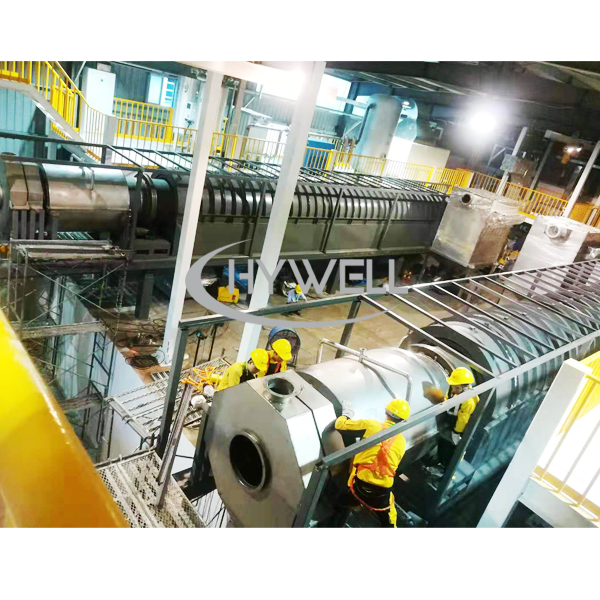
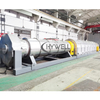
Battery Recycling Rotary Calciner
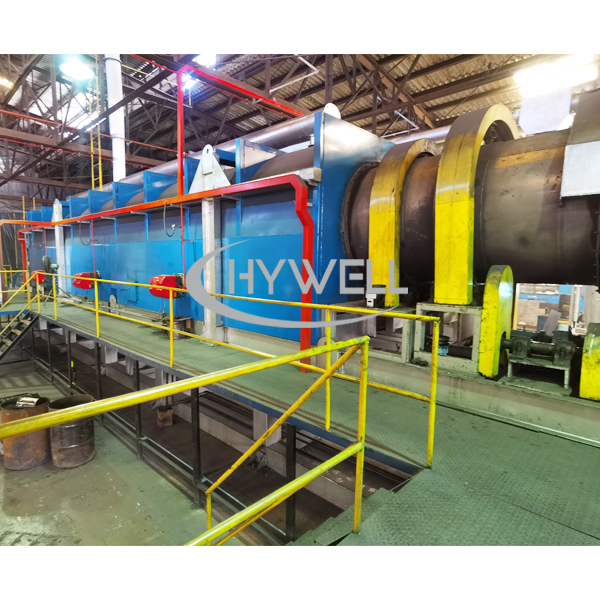
Battery Recycling Rotary Calciner
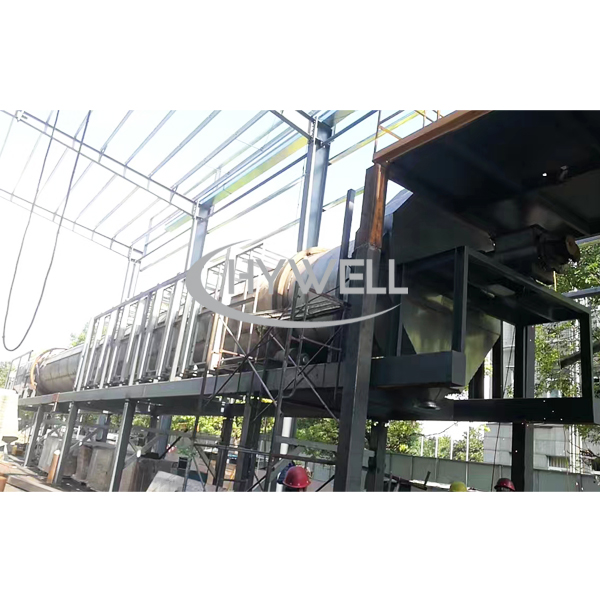
Battery Recycling Rotary Calciner
Recycling Solution with Rotary Kiln Thermolysis
Rotary Calciners are a highly effective and cost-efficient means for high-temperature processing of various granular products and powders. The unit is specially designed to provide for controlled and uniform process conditions.
Material is fed into a rotating cylinder that is externally heated according to process-related time versus temperature criteria. As the cylinder rotates, the material is gently tumbled as it flows from the feed end of the cylinder to the discharge end. The action promotes uniform exposure of the product to a defined environment. Various processes employ reaction gases in direct contact with the product to propagate a given reaction or cover gases to protect the product.
Proper selection of the calciner cylinder material is critical and is determined by process temperature, process compatibility, and physical size considerations.
Hywell Machinery rotary calciners are provided with automatic temperature, pressure, and electrical controls with furnaces featuring multiple gas, oil, or dual fuel burners, or electrical heating elements arranged in zones. Available in sizes ranging from 50-3000mm diameter with lengths from 5 to over 20m.

 Русский
 English
 العربية
 Français
 Español
 Português
 Deutsch
 italiano
 日本語
日本語 한국어
한국어 Nederlands
 Tiếng Việt
 ไทย
ไทย Polski
 Türkçe
 ພາສາລາວ
 Bahasa Melayu
 Filipino
 Bahasa Indonesia
 magyar
 Română
 Čeština
 қазақ
қазақ Српски
 हिन्दी
 فارسی
فارسی Slovenčina
 Slovenščina
 Norsk
Norsk Svenska
 українська
 Ελληνικά
 Suomi
Suomi Հայերեն
 עברית
עברית Dansk
Dansk اردو
اردو বাংলা
বাংলা Hrvatski
 Afrikaans
 Gaeilge
 Eesti keel
 Māori
Māori नेपाली
 Oʻzbekcha
 latviešu
 Azərbaycan dili
 Беларуская мова
 Български
 ქართული
 Kurdî
Kurdî Кыргызча


 简体中文
简体中文