What is a Seasoning Granule Production Line?
A seasoning granule production line is an integrated system used to transform powder-based seasonings into granules. The process improves flowability, reduces dust, and enhances product consistency.
This seasoning granulation line typically includes powder mixing, wet granulation, drying, and screening processes. It is suitable for food manufacturers who require stable and high-quality granule production.
A Seasoning Granule Production Line is an integrated system that transforms powdered seasonings into granules. This process improves powder flowability, reduces dust, and enhances product consistency. The most crucial aspect of a seasoning granule production line is the need for rapid dissolution of the granules produced.
This seasoning granulation production line typically includes processes such as wet mixing of powders (mixing powder and liquid), wet granulation, drying, sieving, and packing. It is suitable for food manufacturers requiring stable, high-quality granule production.
How to Convert Seasoning Powder into Granules?
To convert seasoning powder into granules, a wet granulation process is commonly used. The basic steps include:
Mixing seasoning powder evenly
Adding a liquid binder to form a wet mass
Granulating into uniform particles
Drying the granules to the desired moisture
Screening to achieve the required particle size
This method ensures consistent granule size and better solubility, making it ideal for instant food products.
Process of Wet Granulation Line
Powder to Granule Processing Flow Overview
Raw Material Feeding → Powder Conveying → Automatic Weighing & Dosing → Wet Mixing → Granulation → Drying → Sieving → Packaging → Recycling of Oversized/Undersized Particles
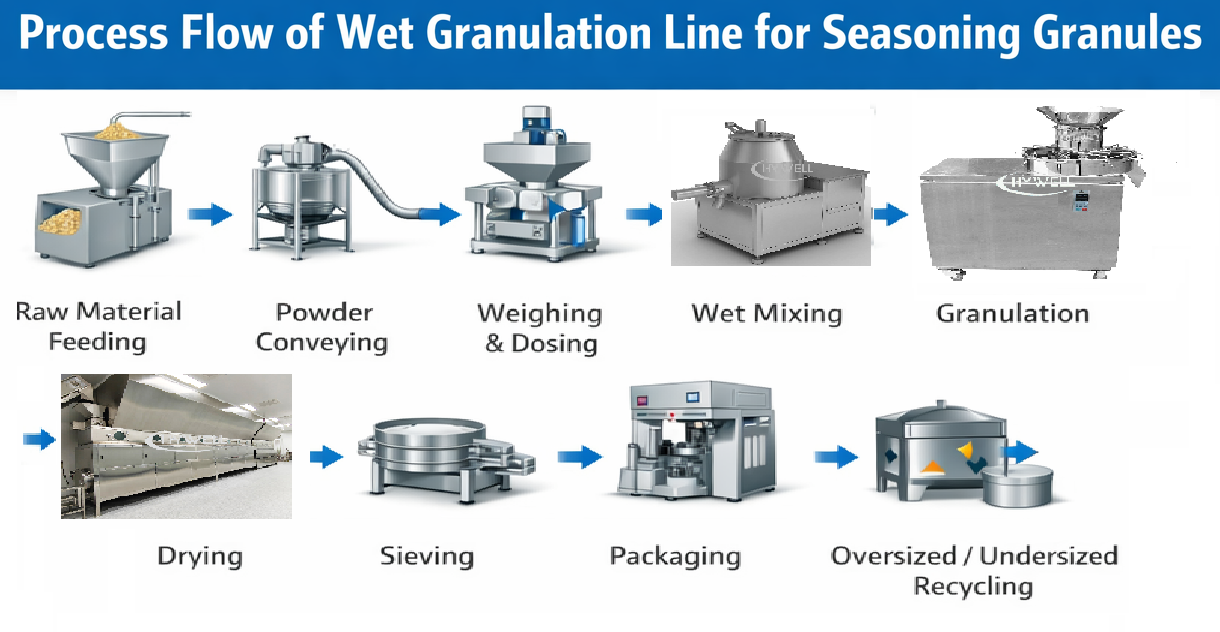
The wet granulation line for seasoning typically includes the following process:
The entire seasoning granule production line can be designed as a closed system to reduce dust and improve hygiene, meeting food-grade production standards.
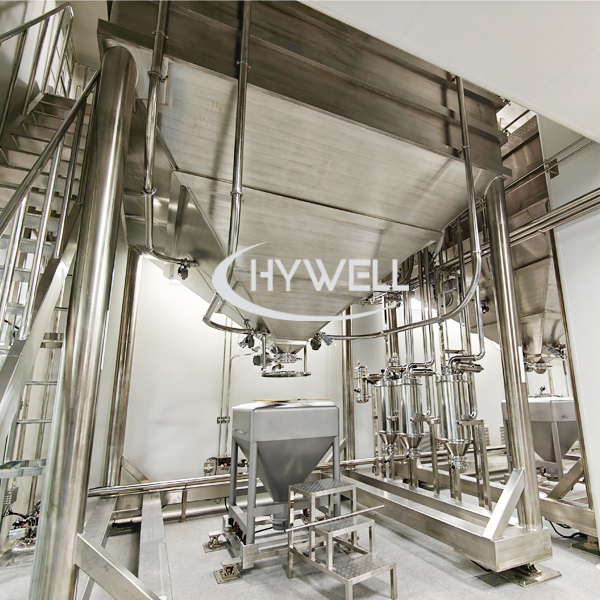
Seasoning granulation line
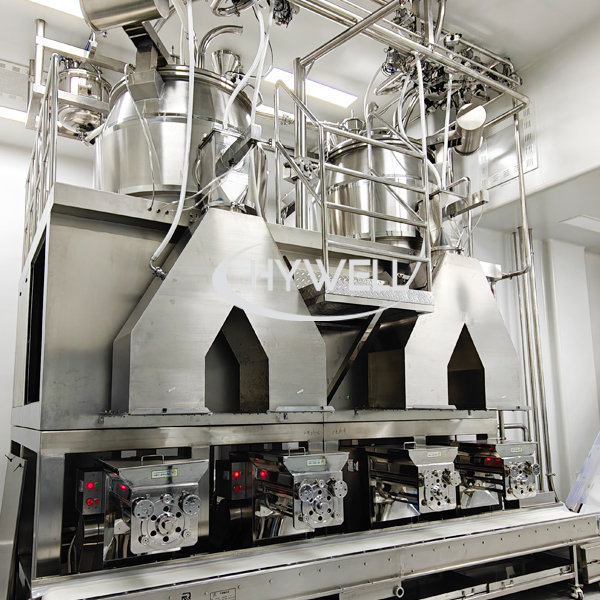
Spice granulation machine
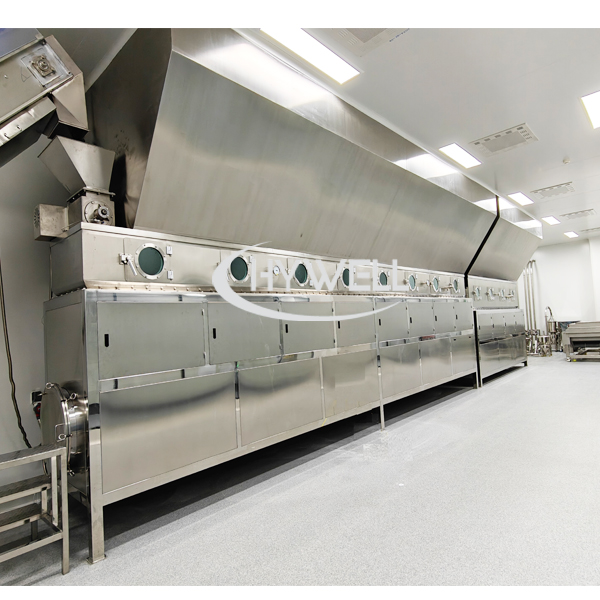
Instant drink granulation line
Main Equipment in the Seasoning Granulation Line
Dust-free Feeding Station for Raw Materials Feeding
The process begins with raw material feeding, where seasoning powders are introduced into the system using a dust-free feeding station. This step ensures stable input and reduces manual handling, improving efficiency in the seasoning granule production line.
Vacuum Feeder for Powder Conveying
Next, the spice is conveyed through a powder conveying system, typically using a vacuum feeder. This achieves a completely enclosed, dust-free conveying process, which is crucial for wet granulation production lines that meet hygiene standards and GMP specifications. Alternatively, a screw feeder can be used for feeding.
Wet Mixing Machine with Automatic Weighing & Dosing
The seasoning powders enter an integrated automatic weighing and dosing system combined with a high shear wet mixer, where ingredients are precisely measured and immediately mixed with liquid binders. This combined process ensures accurate batching, uniform moisture distribution, and optimal preparation for efficient wet granulation while improving overall process efficiency.
Wet Granulation for Seasoning
During granulation, the wetted material is transformed into uniform granules using a basket granulator or swing granulator. This is a key step in the seasoning wet granulation line, improving particle size distribution and product flowability.
Fluid Bed Dryer for Seasoning Granules Drying
The wet instant soup granules then enter the drying stage, typically using a static fluidized bed dryer. This removes excess moisture while maintaining the structure and quality of the seasoning granules. Importantly, our static fluidized bed dryer not only provides a continuous drying process but also meets GMP requirements.
Vibrating Sieve for Seasoning Granules
After drying, the granules pass through a vibrating sieving system to achieve the desired particle size. Oversized and undersized particles are separated to ensure uniformity in the final product.
Packaging Machine
Qualified granules are then transferred to the packaging system, where they are automatically weighed, filled, and sealed into final packages such as sachets or bags.
Recycling of Oversized/Undersized Particles
Finally, any oversized or undersized particles are returned to the process through a recycling system. This closed-loop design minimizes waste and maximizes raw material utilization in the granulation line.
Applications of the Seasoning Granule Production Line
Soup Granules Production Line
This system can be used as a soup granules production line for manufacturing:
These products require instant solubility and consistent granule size, which can be achieved through wet granulation technology.
Spice Granulation Line
The wet granulation system is widely used as a spice granulation line for producing:
Curry powder granules
Chili seasoning granules
BBQ seasoning granules
Mixed spice granules
Granulation improves powder handling, reduces dust, and enhances product appearance.
Instant Drink Granulation
This system is suitable for instant drink granulation, including:
Wet granulation improves dispersibility and instant dissolution in water.
Sugar & Sweetener Granulation
The granulation line can also be used for:
It ensures uniform particle size and better flowability for packaging.
Nutritional & Functional Food Granules
Widely used for:
This makes the system suitable for nutraceutical granulation applications.
Seasoning Granules Granulation Line Video
Advantages of Wet Granulation Technology
Fully Enclosed System: Dust-free operation with high GMP compliance
Integrated Control: PLC system with recipe management and interlocked safety alarms
High Efficiency: Reduces manual handling, shortens batch cycles, and improves throughput
Scalable Capacity: Equipment can be scaled to meet small or industrial production volumes
Hygienic Design: All parts in contact with the product are made of 304 or 316L stainless steel
Easy Cleaning: CIP system available for mixers, granulators, and conveyors
This makes wet granulation the preferred method for seasoning granule production.
Optional Customizations
Full stainless steel 316L contact surfaces for highly corrosive or salty ingredients
Automated CIP cleaning systems for high hygiene environments
Integration with MES or ERP systems for intelligent manufacturing
Custom PLC and HMI interfaces in English, Spanish, or other languages
Validation support for food, pharma, and nutraceutical production
FAQ – Wet Granulation Line for Seasoning Granules
Q1: What is a wet granulation line for seasoning granules?
A wet granulation line for seasoning granules is a food processing system used to convert seasoning powder into uniform granules with improved flowability, solubility, and reduced dust.
Q2: Can this machine be used as a soup granules production line?
Yes, this system can be used as a soup granules production line, and is widely applied for producing instant soup and bouillon granules with excellent solubility.
Q3: What products can be produced by a seasoning granulation line?
This wet granulator system is suitable for producing seasoning granules, spice granules, soup granules, instant drink granules, and other food granules.
Q4: What is the capacity of the seasoning granules production line?
The capacity typically ranges from 300 kg/h to 5000 kg/h, depending on the material characteristics and production requirements.
Q5: Is this wet granulating system suitable for spice granulation line applications?
Yes, the system can be used as a spice granulation line for producing curry powder granules, chili seasoning granules, and mixed spice granules.
Q6: Can this system be used for instant drink granulation?
Yes, it is suitable for instant drink granulation, including coffee mix granules, cocoa drink granules, Ginger tea, and other beverage powders.
Q7: Can the granulation line be customized?
Yes, the wet granulation system can be customized based on different products, capacities, and process requirements.
Q8: What is the typical particle size of seasoning granules?
The particle size can be adjusted, usually ranging from 0.3 mm to 2 mm.
Case Study for 2500kg /h Wet Granulation Line
Powder to Granule Processing Video
Project Overview
A well-known pharmaceutical manufacturer in China, Sanjiu Pharmaceutical, required a highly efficient and automated production solution for cold medicine granules. To meet their large-scale production demand, they purchased two complete granulation production lines from our company.
Each line is designed with a capacity of 2.5 tons per hour, achieving a total output of 5 tons per hour across both lines.
Process Description
The entire production line is designed as a fully integrated and automated system, covering all key stages from raw material handling to final packaging:
1. Automatic Robot Feeding System
Raw materials are automatically loaded into the system using robotic feeding, minimizing manual handling.
2. Grinding / Milling Process
Raw materials are processed into fine powder to meet formulation requirements.
3. Dry Powder Mixing
The pharma powders are uniformly mixed to ensure a consistent formulation.
4. Wet Mixing (High Shear Mixing)
Liquid binders are added to form a homogeneous wet mass.
5. Wet Granulation
The wet mass is processed into uniform granules through a granulation system.
6. Drying Process
Granules are dried efficiently to achieve the desired moisture content.
7. Screening
Final particle size is controlled through vibrating screening.
8. Automatic Packaging
Finished granules are automatically weighed and packed.
Project Benefits
Significant reduction in labor costs
Improved production efficiency and consistency
Enhanced product quality and process control
Compliance with modern pharmaceutical manufacturing requirements
Conclusion
This project demonstrates our capability to deliver large-scale, fully automated granulation production lines for pharmaceutical applications. The successful implementation for Sanjiu Pharmaceutical highlights the reliability, efficiency, and advanced design of our equipment in high-demand production environments.

 English
 Русский
 العربية
 Français
 Español
 Português
 Deutsch
 italiano
 日本語
日本語 한국어
한국어 Nederlands
 Tiếng Việt
 ไทย
ไทย Polski
 Türkçe
 ພາສາລາວ
 Bahasa Melayu
 Filipino
 Bahasa Indonesia
 magyar
 Română
 Čeština
 қазақ
қазақ Српски
 हिन्दी
 فارسی
فارسی Slovenčina
 Slovenščina
 Norsk
Norsk Svenska
 українська
 Ελληνικά
 Suomi
Suomi Հայերեն
 עברית
עברית Dansk
Dansk اردو
اردو বাংলা
বাংলা Hrvatski
 Afrikaans
 Gaeilge
 Eesti keel
 Māori
Māori नेपाली
 Oʻzbekcha
 latviešu
 Azərbaycan dili
 Беларуская мова
 Български
 ქართული
 Kurdî
Kurdî Кыргызча


 简体中文
简体中文